
Guide · Oct 14, 2026
Pet food recalls: current list and how to check your dog or cat food
Dog food and cat food recalls run on one FDA list. Match the brand, product name, lot code and best-by date on your bag, can or pouch against the notice — if they match, stop feeding it and follow the notice's refund steps.
By Michael Gonzales · Last updated
Current status
26 pet recalls in the current federal dataset. Most recent: Wedgewood Pharmacy, LLC.: Compounded veterinary medications (Oct 21, 2026).
Data as of Nov 3, 2026, 11:59 AM EST · Browse all pet recalls
Short answer
Pet food recalls in the U.S. — for dogs and cats alike — are announced by the FDA, which keeps the official list on its Animal & Veterinary Recalls & Withdrawals page. To check your food, match the brand, product name and variety, lot code and best-by date on the package against the recall notice. If they match, stop feeding it, keep the package, and follow the return or refund steps in the notice. The live list for everything pet-related is in our pet recalls hub, and food recalls across every category are at food recalls.
Last checked October 22, 2026 against the FDA's animal recall list. Recalls change often, so always confirm on the FDA notice itself.
One FDA list covers dogs and cats
The FDA list is a single table — date, brand name, product description, the reason for the recall, the company, and whether the recall has been terminated. Dog food makes up most entries, but cat food is there too: in August 2026 the list carried feline milk replacers recalled for low levels of potassium, copper and several vitamins, and in June 2026 a freeze-dried chicken recipe sold for both cats and dogs was recalled because it could contain low levels of thiamine (vitamin B1). Treats, chews, supplements and milk replacers appear alongside regular food.
Two things about the list are worth knowing. First, every recall covers specific lots, not a whole brand. A recent Pedigree recall, for example, covered two lots of one canned flavor — a different flavor, size or lot from the same brand is usually not included unless the notice says so. Second, "terminated" on the FDA list only means the FDA has closed its file on that recall; it says nothing about food already in your cupboard. The lot codes decide that.
How to check a bag, can or pouch
- Find the codes before you open anything. Every match runs on three things printed on the package: the lot code (also called the lot number or production code), the best-by or use-by date, and the UPC barcode number. On bags, look near the top seam or on the back panel. On cans, the codes are stamped on the lid or the bottom. On pouches, check the back and the sealed edges. The FDA notes that the lot number is stamped on the packaging and is always in close proximity to the best-by date — find the date first, and the lot code is right there.
- Keep the original package. This is the step people skip. If you pour kibble into a storage bin, keep the empty bag — or photograph the lot code, date and UPC — until the food is gone. The FDA asks for the original packaging in complaints because those codes identify the plant and production date, and they are exactly what a refund asks for.
- Open the FDA notice for your brand. Start from the FDA's animal recall list and open the company's announcement. It names every affected product, variety, size, lot and date range.
- Match all of it, not just the brand. Same product name and variety, same size, and a lot code and best-by date inside the recalled range. If your codes fall outside the range, the food is not part of that recall.
- Check the store account too. If you bought online, your account may already be flagged — Amazon posts recall notices to customer accounts, and Walmart links each notice from its recall page.
Not sure your package matches? Don't feed it until you've confirmed. Our step-by-step guide to checking whether anything you own has been recalled covers the same matching process for the rest of the house.
What to do if your pet's food is recalled
- Stop feeding it and store what's left somewhere pets and children can't reach it.
- Keep the package, or take clear photos of the lot code, date and UPC. Refunds usually ask for them.
- Follow the notice. It will say whether to return the food to the store for a refund, contact the company, or throw it away. If you throw it away, seal it in a closed plastic bag in a covered trash can so no other animal — including wildlife — can get to it. Don't donate it or feed it to another animal.
- Clean up. For Salmonella or Listeria recalls, FDA notices tell owners to wash and sanitize bowls, cups and storage containers that touched the food, and to wash your hands for at least 20 seconds with soap and hot water after handling it.
- Watch your pet, and call your vet if it seems unwell. Pets with Salmonella infections may be lethargic and have diarrhea or bloody diarrhea, fever and vomiting; some show only decreased appetite, fever and abdominal pain. Only a vet can say whether symptoms are related. If you develop nausea, vomiting, diarrhea, abdominal cramping or fever after handling the food, the FDA's advice is to contact your healthcare provider.
Our guide to refunds for recalled products walks through each return option in more detail.
Why pet food gets recalled — and why it isn't only about pets
Recent FDA entries fall into three groups:
- Germs: Salmonella and Listeria are the repeat offenders, in everything from raw and freeze-dried foods to canned recipes and treats.
- Foreign material: pieces of metal or plastic found in production.
- Nutrient problems: too much or too little of a vitamin or mineral — variable vitamin D in a milk replacer, low thiamine in a freeze-dried food.
The germ recalls matter for the whole household. FDA notices state it plainly: Salmonella can affect animals eating the product, and there is risk to humans from handling contaminated pet products — and an infected but healthy-looking pet can be a carrier that infects other animals or people. That's why the FDA publishes safe-handling guidance for all pet food, recalled or not: wash hands before and after handling it, wash bowls and scoops after each use, don't use the food bowl as the scoop, store dry food in its original bag in a cool, dry place, and refrigerate leftover canned or pouched food promptly. The FDA also warns that raw pet food is more likely than processed food to carry Salmonella and Listeria, for pets and owners alike.
How to report a problem and get alerts
If your pet got sick and you suspect the food — or you found something in it that shouldn't be there — the FDA takes reports through its pet food complaint process: file electronically through the FDA Safety Reporting Portal, or call the FDA Consumer Complaint Coordinator for your state (foodsafety.gov also lists a Center for Veterinary Medicine complaint coordinator line). Have the package handy: the FDA asks for the exact product name, container type, lot number, best-by date, UPC, and where and when you bought it. Reports like these are how some recalls start.
To hear about the next one without going looking:
- Check the FDA list whenever you switch brands or open a new bag — and check this page, which tracks the same list.
- Register the food if the brand offers it; our product registration guide explains how brands use those lists to reach buyers directly.
- Set an alert on the products you own in our recall center, and we'll email you if one of them shows up in a recall.
Facts and handling guidance checked October 22, 2026 against FDA Animal & Veterinary recall pages and the FDA's published pet food guidance. The agency notice for your product is always the final word.
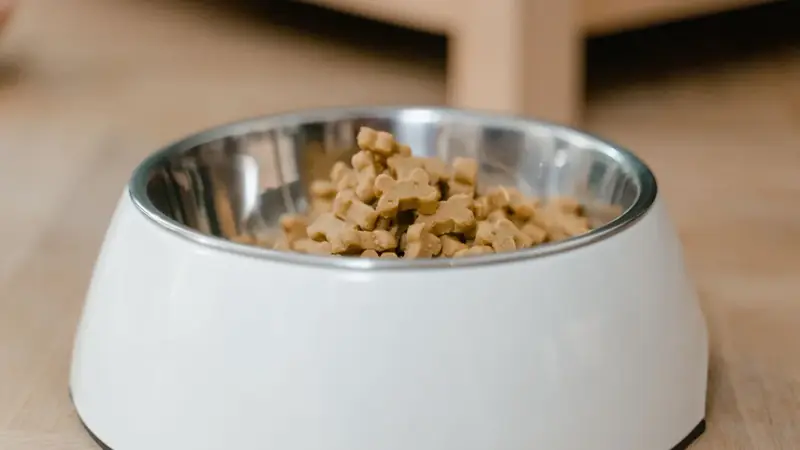
Photo: MART PRODUCTION / Pexels
Frequently asked questions
How do I check if my pet food is recalled?
Find the lot code and best-by date on the package — on bags they're usually near the top seam or on the back, on cans they're stamped on the lid or bottom, and the lot code always sits close to the best-by date. Then open the FDA's Recalls & Withdrawals list for animal products, find your brand's notice, and compare the product name, variety, size, lot code and date. All of them have to match; a recall for one flavor or size usually does not cover the rest of the brand.
Does the FDA recall cat food too, or only dog food?
Both. Cat food appears on the same FDA animal recall list as dog food — recent entries include feline milk replacers recalled in August 2026 over low nutrient levels and a freeze-dried chicken food for cats and dogs recalled in June 2026 over low thiamine (vitamin B1). The check is identical: match the brand, variety, lot code and best-by date on your cat's bag or can against the notice.
My pet already ate some of the recalled food. What should I do?
Stop feeding it and watch your pet. In FDA recall notices, pets with Salmonella infections may be lethargic and have diarrhea or bloody diarrhea, fever and vomiting; some show only decreased appetite, fever and abdominal pain — and infected but otherwise healthy pets can be carriers that infect other animals or people. If your pet shows any of these signs after eating a recalled product, the FDA's advice is to contact your veterinarian.
Can I get sick from handling recalled pet food?
Yes — that is why the FDA treats contaminated pet food as a household risk, not just a pet risk. FDA notices warn that Salmonella can affect animals eating the product and that there is risk to humans from handling contaminated pet products, especially without thorough hand-washing afterward. Wash your hands for at least 20 seconds with soap and hot water after handling pet food, and wash bowls, scoops and storage bins after each use.
Written by
Michael Gonzales
Founder & Editor
Michael Gonzales is the founder of Cloudalien Technologies, the company behind ConsumerSun. He built ConsumerSun so anyone can check the products they already own against official recall records from the CPSC, FDA and NHTSA — and get an alert when something in their home is recalled.